Learning Resources

National Galleries Scotland: Maths in Motion

Best suited for Early, First and Second Level

This resource offers six activities to ignite interest in both maths and art. We’ve put together a slide show ready for use in your setting.

Activities include symmetry, balance, speed, moving objects and pattern. Questions and tasks are deliberately open-ended to encourage learners to problem solve and develop their creativity skills.

Created by National Galleries Scotland

Collie Dog Maths Tales

Best suited for Early, First and Second Level

Collie Dog Maths Tales is a series of five videos, exploring maths on the farm. In each video, you will join a different collie dog and go for a walk around the farm looking at different maths (and science and technology) along the way. The videos looks at real maths problems on the farm, and the supporting information includes lessons plans and additional tasks and ideas.

Produced by the Royal Highland Education Trust, with grant funding from Maths Week Scotland, and originally delivered as part of Maths Week 2024.

In-person Maths Trails

Best suited for Early, First and Second Level

There are a selection of in-person maths trails available for self directed museums visits. This includes trails specifically for schools, as well as trails for families that are also suitable for Early and First Level. The venues with trails include:

  • Edinburgh Castle
  • National Museum of Scotland (Edinburgh)
  • National Museum of Flight (East Lothian)
  • National Museum of Rural Life (East Kilbride)
  • Summerlee Museum of Scottish Industrial Life (Coatbridge)
  • Scottish Fisheries Museum (Anstruther)
  • Borders Textile Towerhouse (Hawick)
external

Scots Numbers

Best suited for Early, First and Second Level

Scots Language Centre have a set of numbers in Scots which are useful for teaching purposes. The numbers are available as a downloadable PDF, along with a list of suggested activities and associated materials. Use them as part of your classroom display, in sequencing exercises, numeracy tasks and more!

Shape Scavenger Hunt

Best suited for Early, First and Second Level

A scavenger hunt is a great way to get out and about and have some fun with maths. Go on a Shape Hunt outdoors, looking for how many different shapes you can find. Why not document what you find and share your photographs with us online!

video

Shape Mice

Best suited for Early, First and Second Level

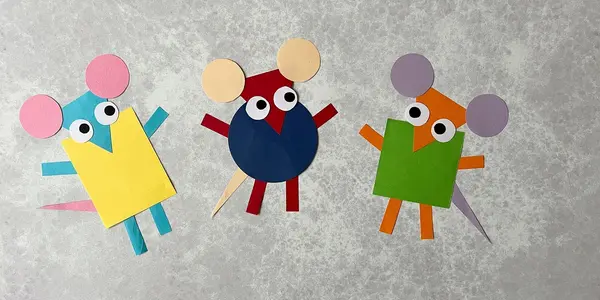
Celebrate Burns Night with this shape activity, in honour of one of Robert Burns' most well known poems, 'To a Mouse'. Cut out shapes of different sizes from coloured paper or card, and arrange them to create mice. What other shapes can you use? How about a pentagon or a hexagon mouse?

Miner birds: Addition and subtraction

Best suited to Early, First and Second Level

Miner birds is a series of multi-player, curriculum-linked maths games on Busy Things, designed specifically to put addition and subtraction skills to the test.

In the game, pupils can play against up to 3 opponents, which can either be other pupils or computers. The aim is to answer the questions to earn worms and the player who is the first to reach 20 worms is the winner. Pupils earn more worms if they answer trickier questions but expect some surprises along the way to trip you up!

Available for free with a 28 day trial. 

Ancient Egyptian maths resources

Best suited for First Level

These ancient Egyptian maths worksheets are designed to explore maths and ancient Egypt.

  • Count Like An Ancient Egyptian: Explore how ancient Egyptians wrote and used numbers.
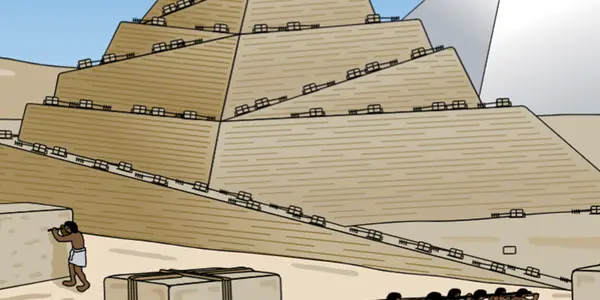
  • Pyramid stones: Discover how huge stones were moved across Egypt to build the pyramids.
  • The Rhind papyrus: Try to crack this real ancient Egyptian maths problem.

Created by National Museums Scotland

BBC Rainbow Quizzes

Best suited for First Level

The Rainbow Quiz is a set of audio quizzes for First Level classes, presented by BBC Scotland's Catriona Shearer.

external

Busy Things: Wild Maths

Best suited for First Level
 

Busy Things highlight three of their engaging activities for Maths Week Scotland 2025, along with one of their teacher tools, which will support you when celebrating maths in nature.

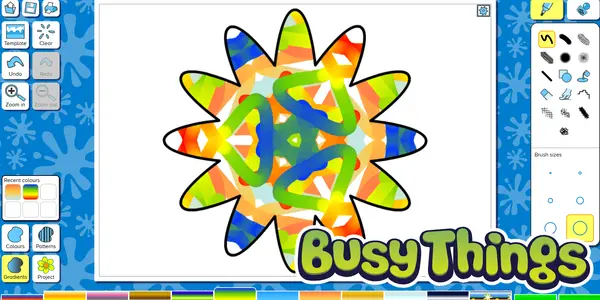
‘Flowers’ is a Maths activity that explores symmetry. Pupils choose one of the four flower templates to decorate, and can use a whole range of colours, textures and stamps to do so. Want to extend the activity and make it wilder? Print out the Busy Things’ template and ask the children to create a symmetrical flower head using natural materials from the playground or park, like sticks and leaves.

Available for free with a 28 day trial. 

Finn Finity and the Wild Maths Zoo Adventure

Best suited for First and Second Level

Read the interactive story together, set at Edinburgh Zoo, and solve the maths puzzles and challenges along the way. Includes teachers pack with supporting notes, slideshow and more.

Maths Code Game

Best suited for First and Second Level

For Maths Week Scotland 2019, Anderston Primary School in Glasgow created a Maths Code Game that you can play at school or at home, no matter where you live. You will need a mobile phone with the free Escape Team app installed.

Access the game, some maths trails to do locally in Glasgow, plus tips on how to create your own, via the Anderston Primary School website below.

Funding for the trails came from the Maths Week Scotland Small Grants Fund. Content for the day developed by school staff with support from the Parent Council.

Sumdog Times Tables Pack

Best suited for First and Second Level

A good understanding of times tables, and the ability to recall them quickly, is an essential foundation for children’s learning. So at Sumdog, we've made all our practice tools fun and engaging!

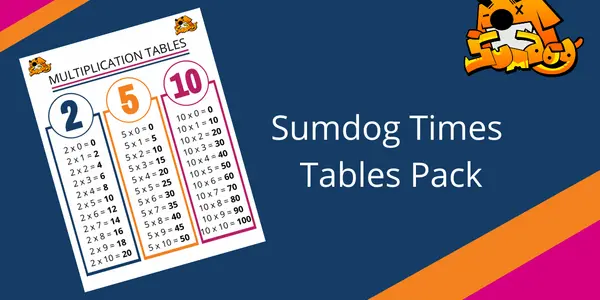
Download our free Times Tables pack to access our Pathway to Multiplication Success, lesson plans and times tables cards to use during Maths Week Scotland.

Active Times Table Challenge

Best suited for First and Second Level

Make learning fun by working together in your classroom or at home to get a high score in physically active times tables.

  • Copy the presenter's actions while chanting times tables
  • Solve the on-screen challenge quiz questions correctly for more points
  • Easy to use 10-minute sessions, ideal for a lesson starter or practising at home

The Times Table Challenge resources are available completely FREE for two weeks. After this, you will keep a subset of sessions; if you would like to help your learners master times tables with all resources you can upgrade your subscription.

Online Talk: Environmental Statistics

Best suited for First and Second Level

When we build wind farms, what happens to the wildlife? In this interactive talk, statistician Katherine Whyte looks at how we can use maths and statistics to help us balance the benefits of wind energy with the risks posed to ocean wildlife like seals and seabirds. Where were the animals before we built the wind farm, and how many were there? How many animals leave when a wind farm is built, and do they come back? What do animals do when they are near a wind farm, and can they still find enough food in the sea?

Statistics is an important tool in helping us to answer these questions, and helping us make decisions that are both good for the planet and good for our local wildlife.

Part of the Royal Statistical Society's William Guy Lecture Series

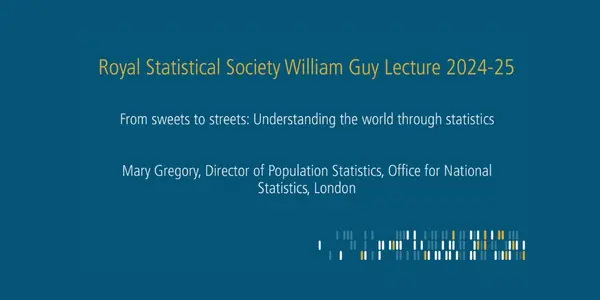
Online Talk: From sweets to streets: Understanding the world through statistics

Best suited for First and Second Level

Numbers can be found everywhere. This talk provides an opportunity to learn more about how statistics can help us understand the world around us, with a strong emphasis on making the examples fun, engaging and applicable to anyone.  

Illustrated examples are provided throughout the talk, supplemented with ideas for practical activities and topics for class discussion. The talk can be watched in one go, or each section can be used to support learning and spark follow-up discussion separately. 

Part of the Royal Statistical Society's William Guy Lecture Series

Online Talk: Little Bo-Peep has lost her mother duck – what nursery rhymes teach us about AI

Best suited for First and Second Level

The introduction to the talk will cover the types of AI that children might encounter, including generative AI systems such as ChatGPT.  Principal Data Scientist Rebecca Duke will then show how you can use nursery rhyme lyrics to build your own generative AI, starting with a simple algorithm based on the most popular combinations of words and increasing the complexity using random chance. The last section of the talk will discuss some of the positive and negative aspects of generative AI to help children to become more informed and responsible users of the technology. 

Part of the Royal Statistical Society's William Guy Lecture Series

Pier Arts Centre activities

Best suited for First and Second Level

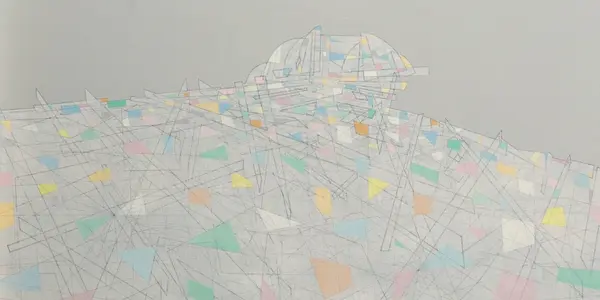
Explore four artworks from the Pier Arts Centre collection with these art activity sheets. Explore shapes and composition through the work of Ben Nicholson, three-dimensional paper folding inspired by Jim Lambie, Mobius loops through the work of Barbara Hepworth, and geometric drawing inspired by Steven MacIver.

Artwork credit: Steven MacIver, Akasaka, 2010

video

Number Doodles

Best suited for First and Second Level

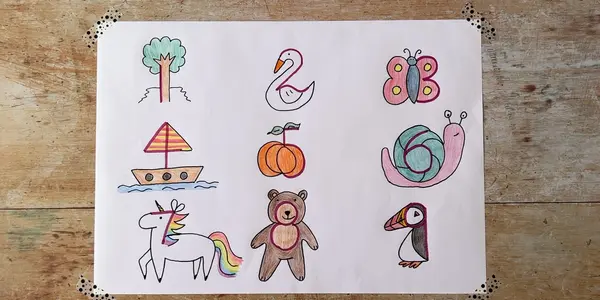
Numerical doodles are a fun way for children to gain more confidence in recognising and naming numbers. Older learners can also still have fun getting creative. Try your hand at recreating our doodles, or create your own - what can you turn each number in to? We have a Christmas version in our seasonal Family Activities section too.