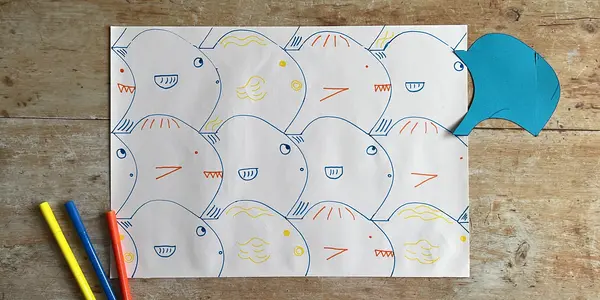
DIY Tessellation Templates
Best suited for First and Second Level
A quick tutorial on how pupils can make their own tessellation template, so that the repeating pattern fits together.
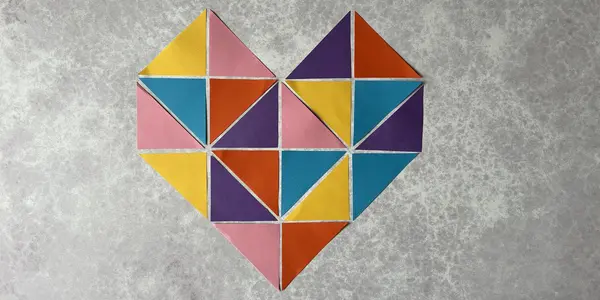
Best suited for First and Second Level
A quick tutorial on how pupils can make their own tessellation template, so that the repeating pattern fits together.
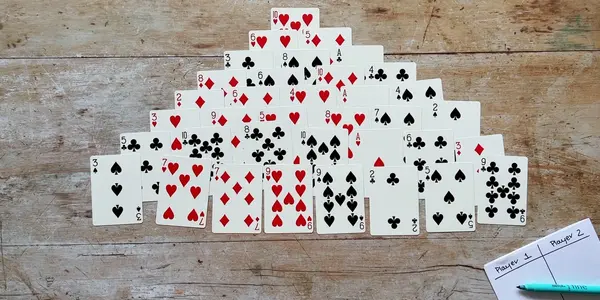
Best suited for First and Second Level
Create a geometric heart out of squares and triangles, and learn about patterns, fractions and multiplication along the way.
Best suited for First and Second Level
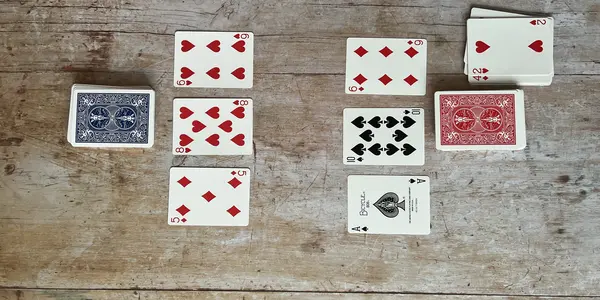
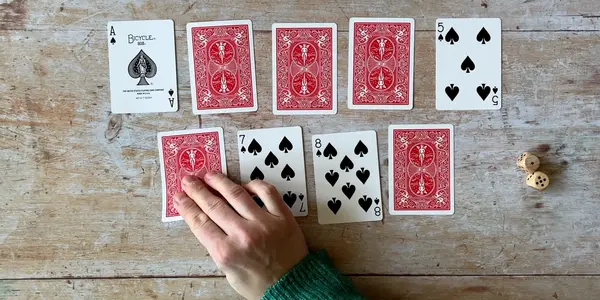
Pyramid is a card game for two or more players. The video shows Pyramid addition, but the same game play can be used for multiplication. For either version, you will need a standard set of cards with the face cards (Jack, Queen, King) removed.
Best suited for First and Second level
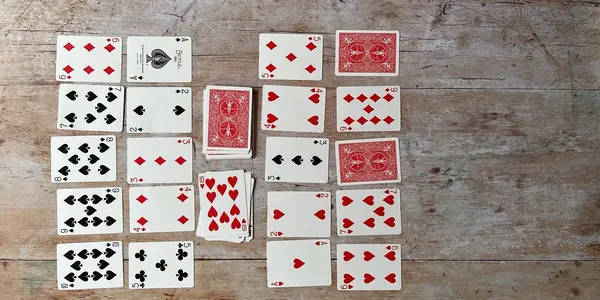
Maths War is a great little game to practice different kinds of maths skills, including number values, place value, addition and multiplication. It works best with 2-4 children. All you need is one of two packs of regular playing cards, with the face cards (Jack, Queen, King) removed.
Best suited for First and Second Level
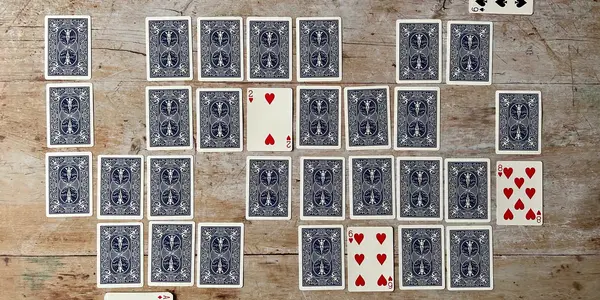
The card game 'Trash' (also known as 'Garbage') is great for number recognition and for practicing number sequences. It can be played with standard playing cards (1 pack of cards per every 2 players).
Best suited for First and Second Level
This is a great card game for practicing simple equations, including addition, subtraction, multiplication and division. All you need is one deck of regular playing cards, with the face cards (Jack, Queen, King) removed.
Best suited for First and Second Level
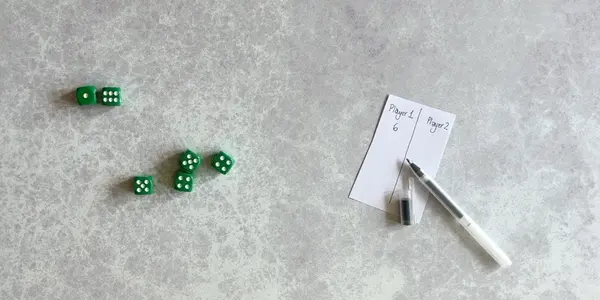
Sevens is a dice game for two or more players, that encourages number and quantity recognition, and basic addition skills.
Best suited for First and Second Level
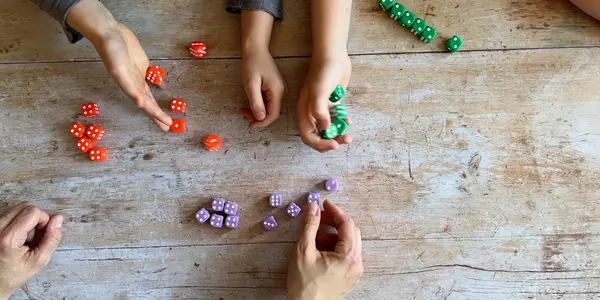
Tenzi is a dice game for two or more players, which is great for number recognition. You will need a set of ten dice per player.
Best suited for First and Second Level
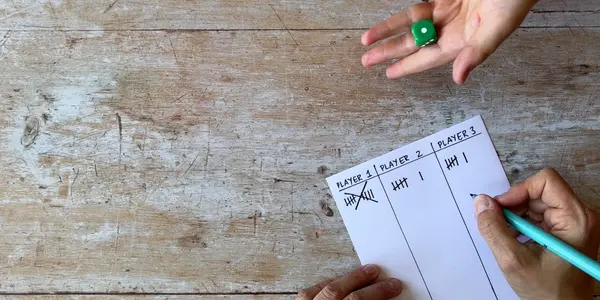
Pig is a dice game for two or more players. It's what's known as a jeopardy game, where you have to decide whether to jeopardise previous points gained by rolling again to gain even more points. As well as practicing basic maths skills counting up your scores, Pig teaches you to think strategically.
Best suited for First and Second Level
Shut the Box is a dice game for two or more players, and is great for encouraging number recognition and practicing addition and number bonds. It can be played with standard playing cards instead of the traditional box.
Best suited for First, Second and Third Level
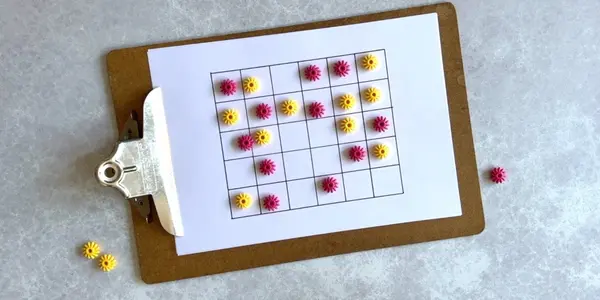
Dara is a row building game for two players from Northwest Africa, that encourages number sense, logical thinking and spacial perception. You will need 12 counters per player, plus a pen and some paper, or download or free playing sheet.
Best suited for First, Second and Third Level
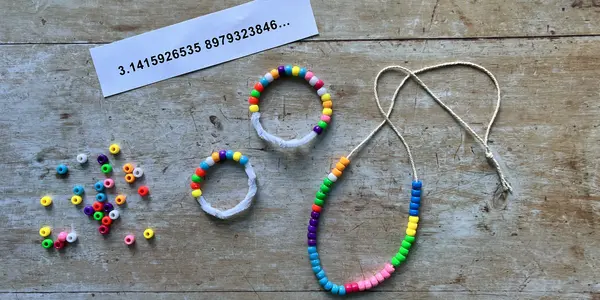
These Pi necklaces and bracelets are a fun way for children to learn about Pi and learn the first few digits. It's a great activity for encouraging fine motor skills too.
Best Suited for First, Second and Third Level
Join Numberella, Ronnie Resist, Miss A Go and The Thief in an exciting interactive adventure that will take you deep into the jungle of the lost world of Meravilium. Use your maths skills to help the adventurers outwit the mysterious talking creatures who guard the great pyramid… and help them discover the secrets that lie inside!
There are two difficulty levels to choose from, one for the 7-10 age group and one for the 11-14 age group.
Best Suited for First, Second and Third Level
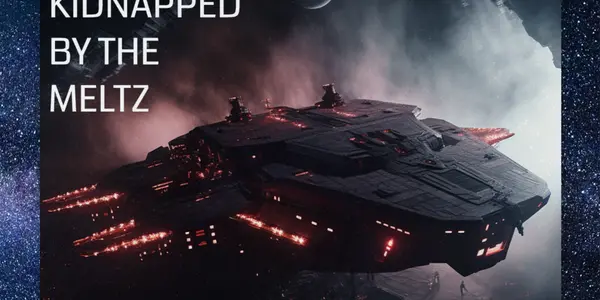
The year is 2099. Numberella, Ronnie Resist and The Thief are in downtown Probabilium. Suddenly a space ship pulls up and emits a cloud of nerve gas. They fall to the ground, motionless. Hooded figures jump out and bundle them inside… Numberella, Ronnie and The Thief have been kidnapped by The Meltz! Your mission is to help the three friends escape the space ship and return safely to Earth. Buckle up, get your maths brains in gear and let’s go!
There are two difficulty levels to choose from, one for the 7-10 age group and one for the 11-14 age group.
Best suited for First, Second and Third Level
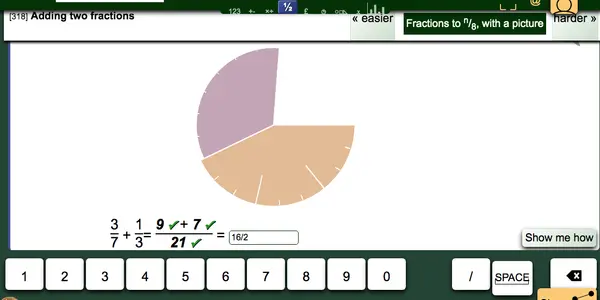
Psychology-led maths platform with a particular emphasis on helping with and preventing maths anxiety. 0maths has difficulty levels, hints, worked solutions and a staggering variety of questions, including 35 ways to learn a times table, 24 exercises to learn number bonds, 48 fractions exercises, and nearly 500 other activities.
Best suited for First Level and above
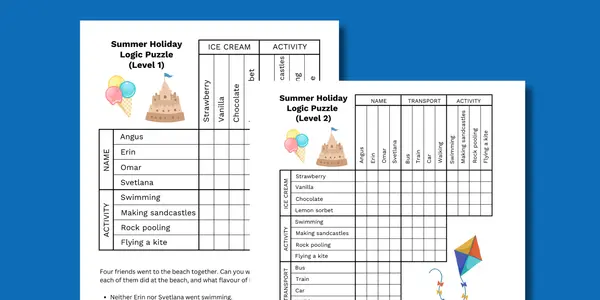
Various free printable puzzles, such as Sudoku, logic puzzles, code breaking, search & find counting puzzles, grid coordinated puzzles, and others. Perfect for end of term of seasonal maths fun. Includes puzzles for Spring/ Easter, Halloween, and Christmas.
Best suited for First, Second and Third Level
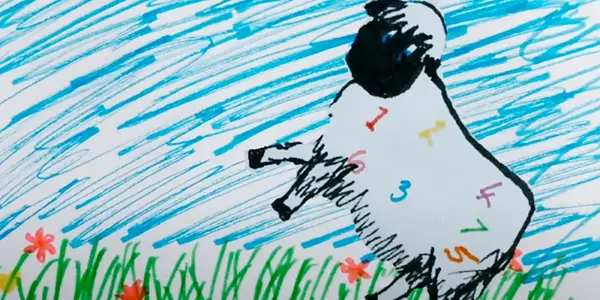
Try your hand at coding and bring a character to life with code in Scratch! Follow along with Claire Quigley from Glasgow Life to try the example below of a “Counting Sheep” to see how it’s done, or watch our video at scienceceilidh.com/codedance and then share your animation!
Content created by Science Ceilidh
Best suited for First, Second and Third/Fourth Level
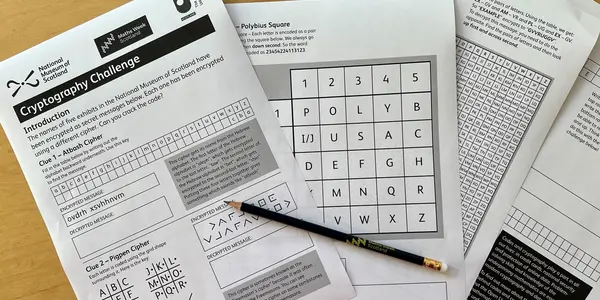
Five exhibits at National Museum of Scotland and the National Museum of Flight have been written in code! Can you use your code breaking skills to find out what they are? Or use the resources to create some challenges of your own.
Note: you don't need to be at the museum to solve the challenges.
Created by Open University Faculty of STEM
Best suited for First, Second and Third/Fourth Level
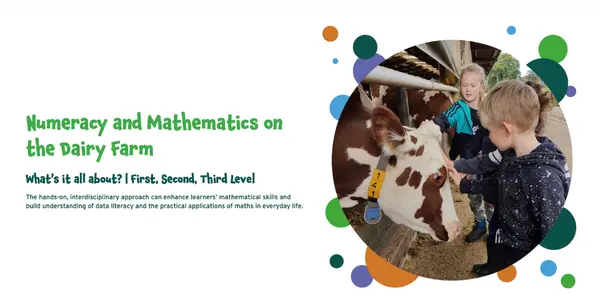
The hands-on, interdisciplinary approach can enhance learners’ mathematical skills and build understanding of data literacy and the practical applications of maths in everyday life. Includes downloadable learning packs for First Level, Second Level, and Third/Fourth Level.
Produced by the Royal Highland Education Trust
Best suited for First, Second and Third/Fourth Level
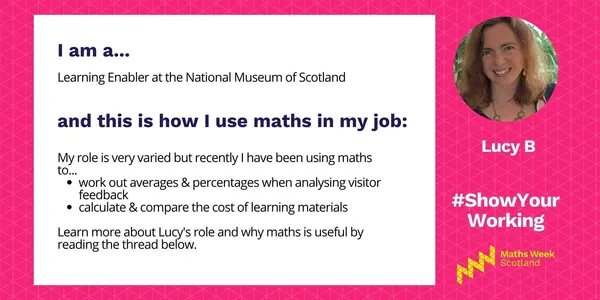
Staff across National Museums Scotland share how important maths is in their work as part of Maths Week Scotlands #ShowYourWorking campaign. Check out them out on Twitter
Why not have a go at some of the activities! Let us know how you get on @NMSEngage and @MathsWeekScot on Twitter.