Best suited for: First & Second Level / Age 5-7, 8-11
Maths involved: symmetry, repeating patterns
Materials needed:
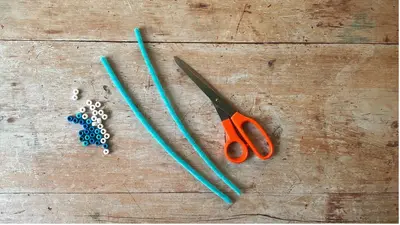
Two 30cm craft pipe cleaners
A pair of scissors
Approx. 36 – 48 beads
The number of beads you will need depends a little on the size of your beads. Our beads were 5mm in height x 8mm in diameter and we needed 42 of them. We used blue and white beads, but you can choose different colours if you like.
Instructions
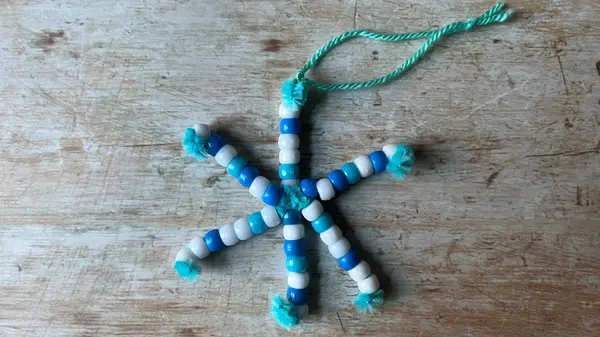
This simple beading activity celebrates the symmetry of snowflakes, and incorporates repeating patterns too. It’s also a great activity for encouraging fine motor skills.
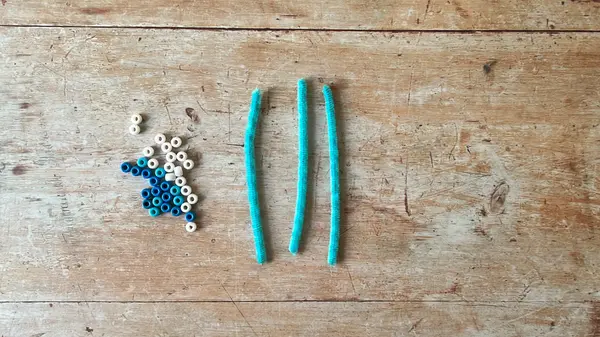
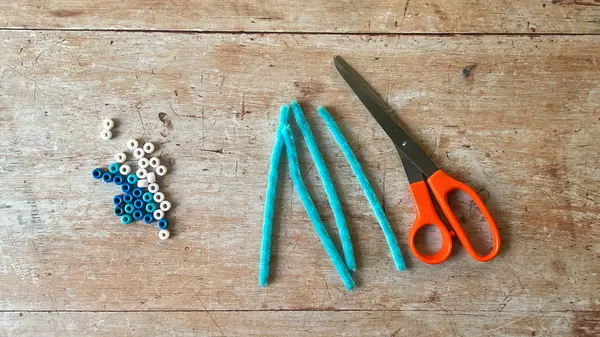
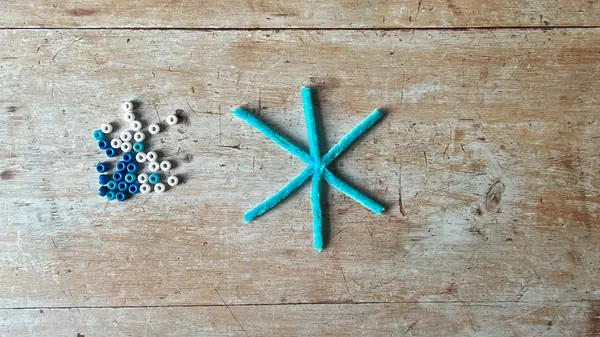
Step 1: Cut both of the pipe cleaners in half. You will only need three pieces.
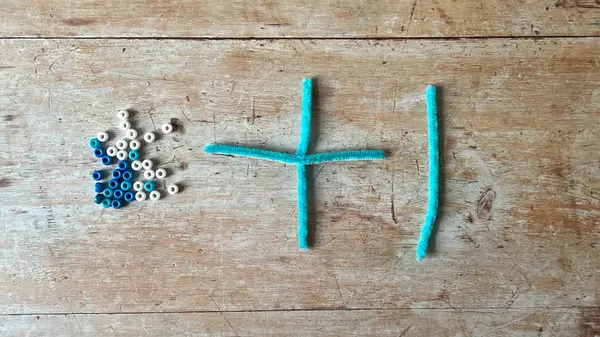
Step 2: Lay two of the pipe cleaner pieces on top of each other to form a cross.
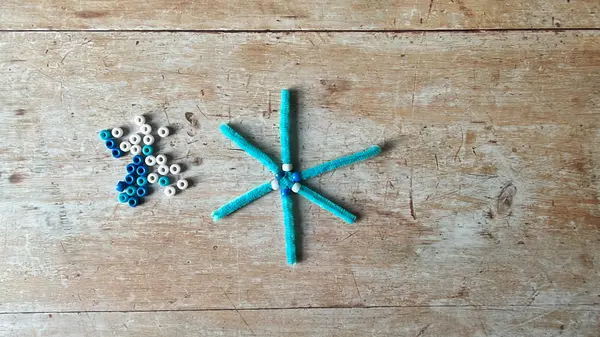
Step 3: Twist the pieces around each other to secure them, then twist the third piece around both of them. Spread out the six branches of the snowflake evenly.
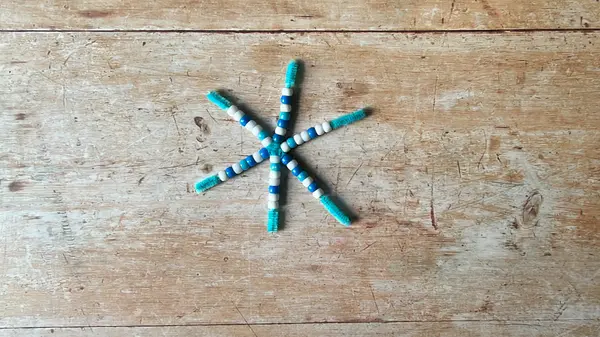
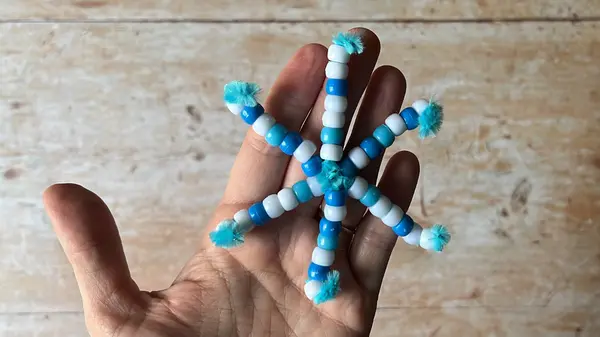
Step 4: Now start adding beads to each of the branches. Can you choose your colours so that the pattern is symmetrical, or to make a repeating pattern?
Step 5: Add enough beads to leave about 2cm of pipe cleaner free at the end of each branch.
Step 6: Fold over the ends of the branches and tuck them in to the last bead, then fold the doubled ends over to the side to stop the end beads from slipping off.
Step 7: Tie a loop of wool or string to the end of one of the branches so you can hang your snowflake up.
Responsibility for the Maths Week Scotland programme is moving to Education Scotland. Planning is underway for the tenth anniversary of the programme. Further information will be available from Education Scotland soon.