Best suited for: Early, First Level & Second / Age 0-4, 5-7, 8-11
Maths involved: counting, sizes, patterns
Materials needed:
Lego/ Lego Duplo bricks (depending on age)
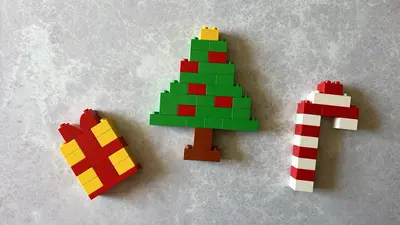
For older children, use regular Lego bricks and challenge them to create more complex versions of the festive designs in our example.
Building with Lego is a great opportunity to incorporate a little maths into children's play time. How many bricks do they need of each colour? What size of bricks - 2x2 blocks, or 2x4? While they're having fun, they're already learning maths without even realising it.
Have a go at recreating our festive Lego build ideas:
How many bricks do you need for each?
Which design needs the most bricks – the present, the tree or the candy cane?
Can you create the same designs with a different number of bricks? What’s the least number of bricks you can do it with?
Can you vary the colours to create different patterns?
Can you increase or decrease the number of bricks to make a bigger or smaller version of the same design?
Taking it further
Now try creating your own festive designs out of Lego! Can you include any repeating patterns or symmetry?
Responsibility for the Maths Week Scotland programme is moving to Education Scotland. Planning is underway for the tenth anniversary of the programme. Further information will be available from Education Scotland soon.