As part of this year's Wild Maths theme, we ran a poetry writing competition inspired by the Fibonacci Sequence - one of the most fascinating sequences found in nature. Each number in the sequence is the sum of the two preceding numbers, giving us the sequence 0, 1, 1, 2, 3, 5, 8, 13, 21, 34, 55 and so on.
For our poetry contest, we invited young people of secondary school age to write their own poem based on this sequence, with either the number of syllables or words in each line corresponding to the numbers in the sequence. We received 350 entries from Secondary Schools across Scotland, covering a wide range of topics. The judging panel narrowed it down to ten finalists, from which one winner and two runners-up were chosen.
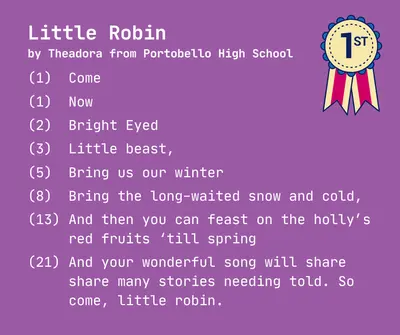
Secondary Schools: Winner
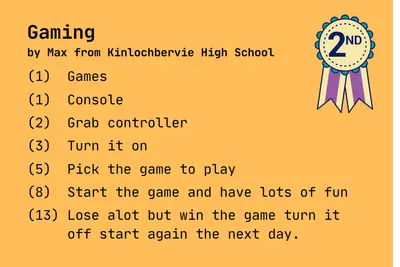
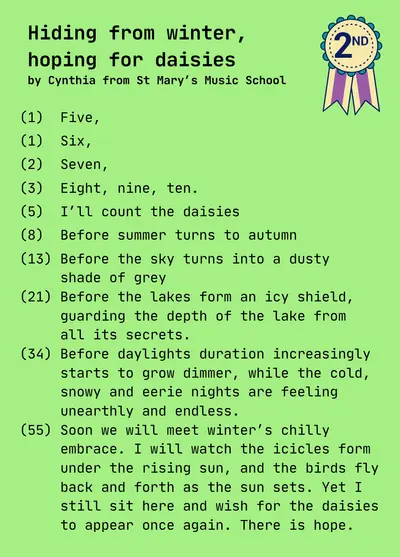
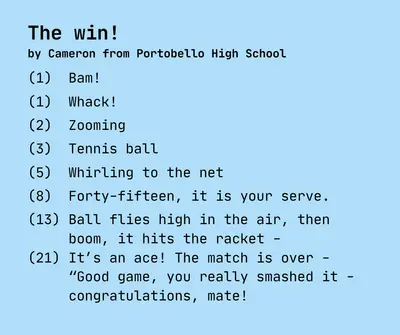
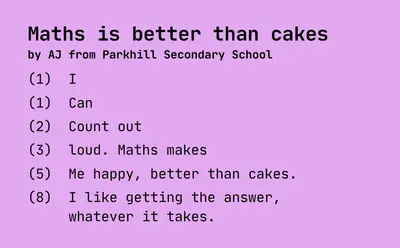
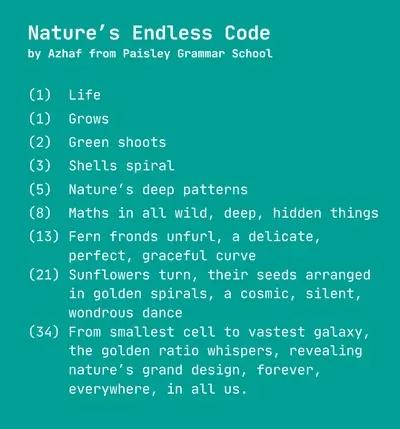
Secondary Schools: Runners-up
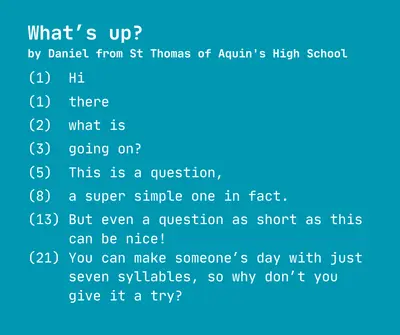
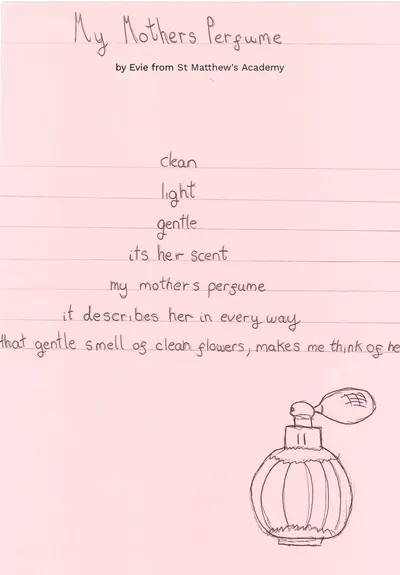
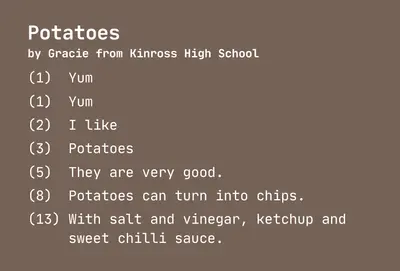
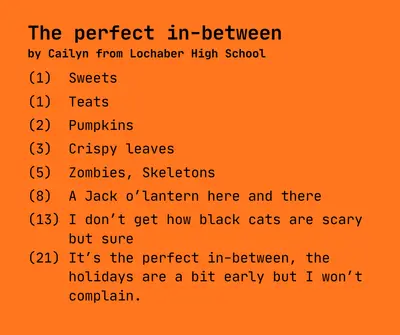
Secondary Schools: Finalists
With such a high quality of entries, it was not an easy task for the judging panel to narrow it down, so we wanted to share the remaining finalists with you as well.
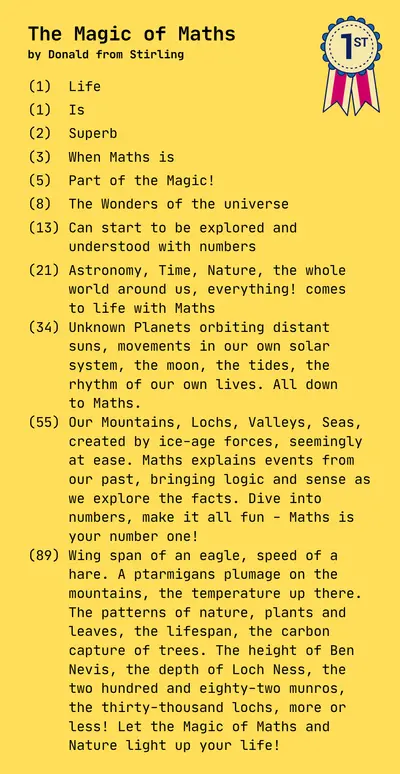
Adults: Winner
The contest was also open to adults (teachers, parents, independent adults and others beyond school). There were fewer entries in this category, so just one winner was chosen. Taking the Fibonacci sequence up to an impressive 89 syllables in his poem, the judges were unanimous in choosing "The Magic of Maths" by Donald from Stirling as the winner.
Thank you to everyone who took part in the contest. We really enjoyed reading all the entries, and hope you enjoyed the creative challenge of bringing maths and poetry together!
Responsibility for the Maths Week Scotland programme is moving to Education Scotland. Planning is underway for the tenth anniversary of the programme. Further information will be available from Education Scotland soon.