Five Field Kono
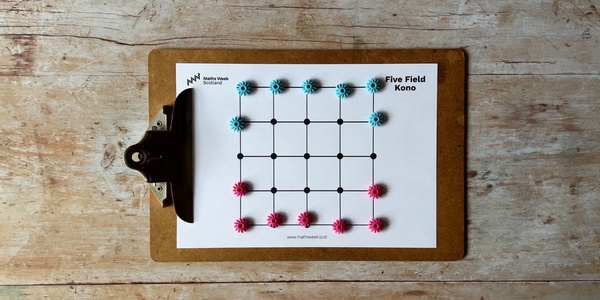
Learn how to play Five Field Kono - a strategy game from Korea. The aim of the game is to be the first to get all your counters to your opponent’s side of the board.
Best suited for Early Level
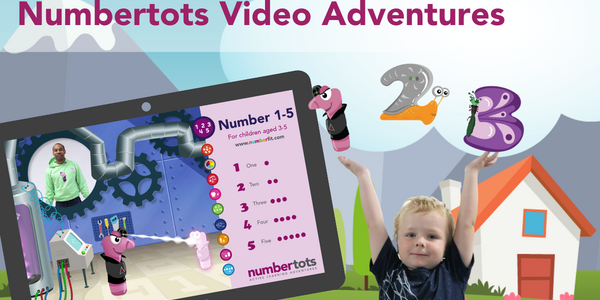
Fun, physically active, story-based sessions teaching maths for 2-5s.
Don’t let your learners miss out and try a session with no-preparation required.
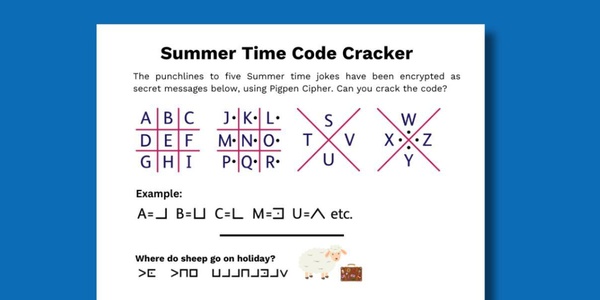
The punchlines to five summer time jokes have been encrypted as secret messages, using Pigpen Cipher. Can you crack the code?
You can also have a go at encrypting your own secret messages, using our Cryptography resource developed by the Open University, with five different ciphers to choose from.
>> Download Code Cracker Challenge
>> Download Cryptography Resource
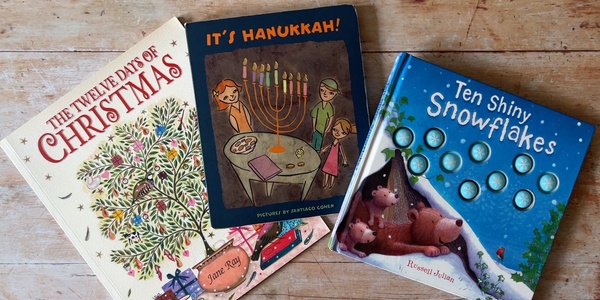
Winter is a perfect time of year to cuddle down with a good book. With plenty of counting books for kids to choose from, it's also a great opportunity to include some maths in your seasonal story time.
(This video was part of our 2022 Christmas Holiday Countdown)
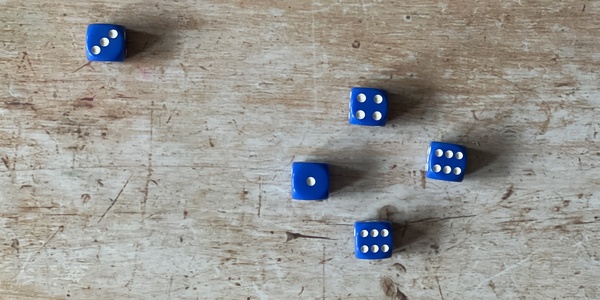
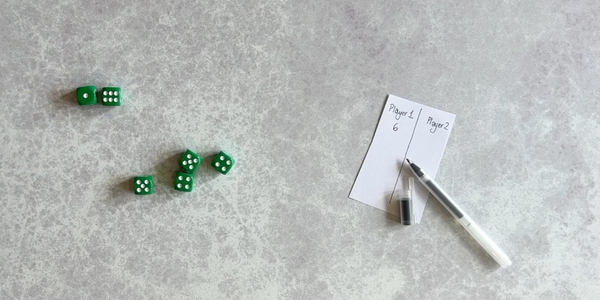
We love a good dice game! If you travel with some dice in your pocket, you'll never be bored, there's so much you can do with them. Today's game Threes Away requires five dice - you'll also need to think strategically, and it encourages number recognition too.
Best suited for Early and First Level
All too often, a barrier to learning is a child's lack of confidence in their own ability, which is why the NumBots Scrapheap Stories were created, free for everyone to enjoy on YouTube. Each adventure serves as a gateway to a different growth mindsets, such as developing resilience, independent learning, respect, teamwork and more.
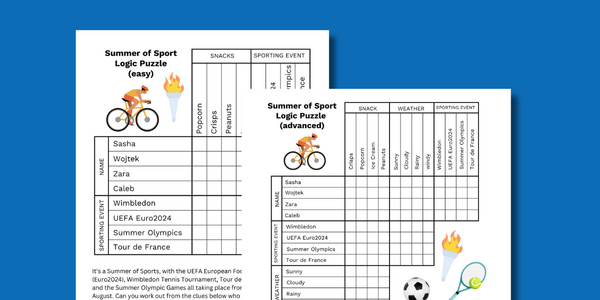
It's a Summer of sports - can you work out from the clues, who has gone to watch which sporting event, and what snacks they are eating? There are two levels of difficulty to choose from. In the advanced level, you'll also need to work out what the weather is like.
Best suited for Early and First Level
We’re thrilled to offer exclusive access to our outdoor-friendly, FREE NumBots resource — Break it to Make it! This flexible and engaging activity is all about breaking numbers into parts, a key skill for early maths learners.
Whether you're:
your students will love exploring numbers in creative, active ways!
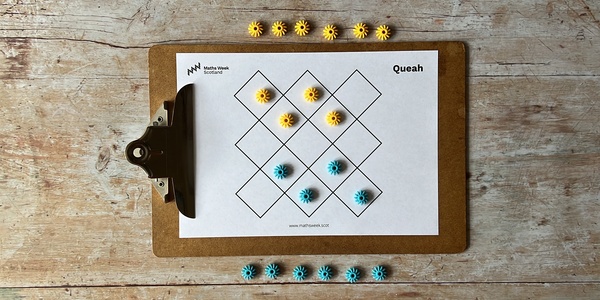
Queah is a traditional board game from Liberia. The two-player strategy game has some similarities to draughts, in that you capture your opponent's counters by jumping over them. A unique feature is that you have a reserve, from which you can replace your captured counters.
This RPG game about maths in Ancient Egypt was developed by Daisy Abbott from Anderston Primary Parent Council, for Maths Week Scotland 2024.
Best suited for Early, First and Second Level
Join Rusy the Robot from the NumBots, and learn some robot dance moves to practice subitising, number bonds, double/half and one/two more/less. The resource combines movement with teacher-to-pupil interactions. The teacher can put the resource on the board (one slide for each activity) and follow the steps to do an activity together.
A collaboration by Numbots and Move & Learn
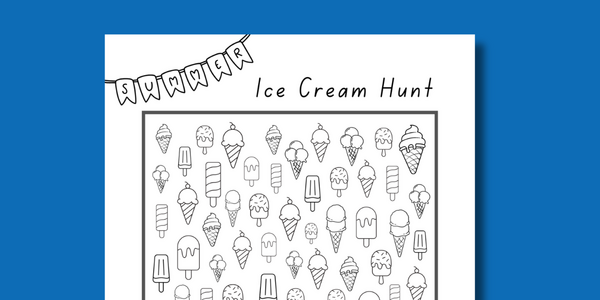
Get ready for some seasonal summer counting fun! How many of each ice cream can you find? For a bonus activity, colour them all in.
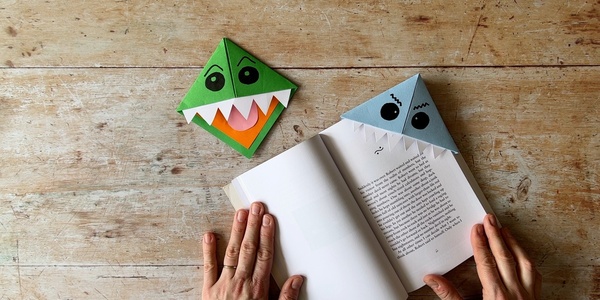
Our theme for 2024 is Maths Tales, so for World Book Day we are showing you how to make an origami bookmark. Origami involves a lot of maths skills, including spatial awareness, fractions, lines, angles, symmetry or rotation.
Best suited for Early, First and Second Level
Twinkl Scotland have been working in collaboration with Maths Week Scotland to produce a wide range of resources linking to and informed by Curriculum for Excellence, which support teaching and learning maths. These free resources include talking cards, activity sheets and classroom ideas to get pupils talking about and engaging with maths. NEW RESOURCES ADDED FOR 2025!
All too often, a barrier to learning is a child's lack of confidence in their own ability, which is why the NumBots Scrapheap Stories were created, free for everyone to enjoy on YouTube. Each adventure serves as a gateway to a different growth mindsets, such as developing resilience, independent learning, respect, teamwork and more.
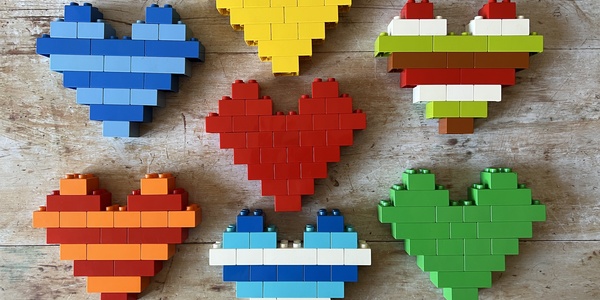
Is there a greater language of love than maths? Well, we may be a bit biased. But there's plenty of maths involved in our fun Valentines Day Lego hearts. So what are you waiting for - raid your Lego box, and get building!
The big circular windows that take pride of place in many churches or cathedrals - often referred to as 'rose windows' - are usually divided into symmetrical sections, with intricate designs made up of shapes. Today, we'll show you how to create your own mini rose window, with a symmetrical design.
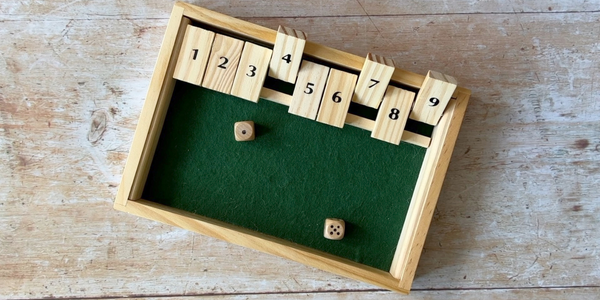
Shut the Box is a fun dice game for two or more players, though can also be played by one player as a solitaire game. It's a great game for encouraging number recognition and practicing addition and number bonds.
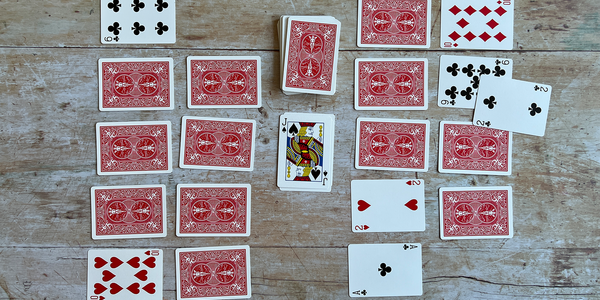
The card game 'Trash' (also known as 'Garbage') is great for number recognition and for practicing number sequences. All you need is a standard deck of 52 playing cards.
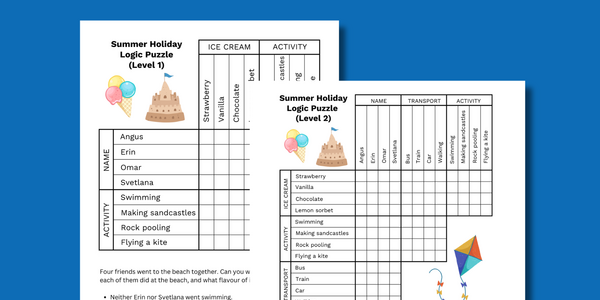
Four friends went to the beach together. Can you work out what activity each of them did at the beach, and what flavour of ice cream they ate? There are two levels of difficulty to choose from. In Level 2, you'll also need to work out how they got to the beach.
Best suited for Early, First and Second Level
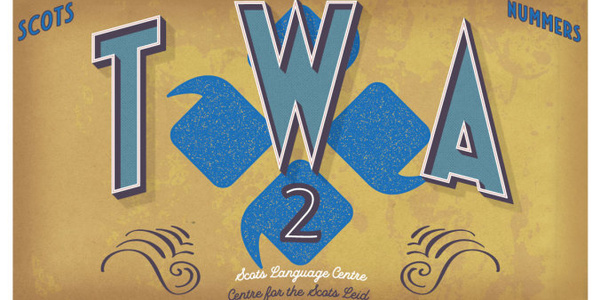
Scots Language Centre have a set of numbers in Scots which are useful for teaching purposes. The numbers are available as a downloadable PDF, along with a list of suggested activities and associated materials. Use them as part of your classroom display, in sequencing exercises, numeracy tasks and more!
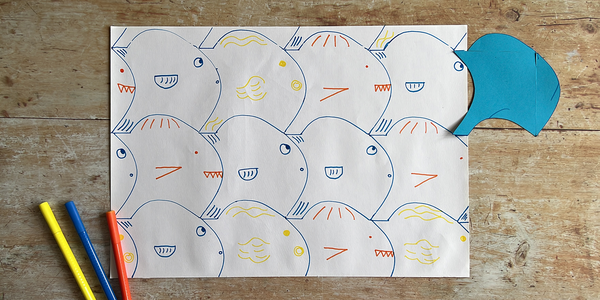
Tessellations are arrangements of shapes closely fitted together, in a repeated pattern without gaps or overlapping. how to make your own tessellation template, so that your repeating pattern fits together.
Sevens is a fun dice game for two or more players, that you can play anywhere, any time. It encourages number and quantity recognition, and basic addition skills.
Best suited for Early, First and Second Level
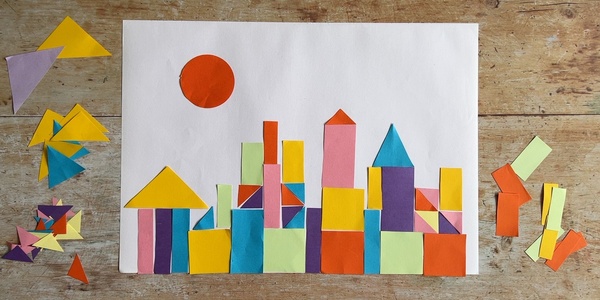
Children can create their geometric cityscape, inspired by the artworks of Paul Klee.